Red Light Therapy for Heart Health and Circulation
Red Light Therapy for Heart Health and Circulation
Red light therapy is best known for skin and muscle recovery, but more and more people ask what it does for circulation and heart health. It's a fair question: healthy blood flow supports almost everything your body does, from delivering oxygen to your muscles to clearing waste after a hard workout. In this article we look at what red light therapy can and can't do for circulation, how that links to recovery, and what the research really says about the heart and blood pressure.
Does Red Light Therapy Increase Blood Flow?
The main idea behind red light therapy and blood flow is nitric oxide, a molecule your body uses to relax and widen blood vessels. Red and near-infrared light are thought to help release nitric oxide in tissue, which may support local circulation.
Lab research supports this mechanism. In a 2022 study in Frontiers in Physiology, researchers exposed mice to 670 nm red light and measured blood flow with laser Doppler imaging. Blood flow was still elevated 30 minutes after the light was switched off, and the researchers concluded that 670 nm light can help dilate blood vessels by releasing a nitric oxide precursor. frontiersinnih
Results in people are more mixed. A 2021 study in healthy men found that photobiomodulation applied 30 minutes or 6 hours before cycling did not change resting blood flow velocity. In short: there is a plausible biological mechanism for local circulation support, but red light is not a proven way to boost overall blood flow. That's why we describe our devices as tools to support circulation as part of a healthy routine. frontiersin
Circulation and Muscle Recovery After Training
This is where circulation becomes practical for active people. After training, your muscles need fresh oxygen and nutrients, while metabolic by-products need to be cleared. Researchers have suggested that improvements in nitric oxide availability and microcirculation from photobiomodulation could help clear these by-products from muscle. frontiersin
The research on recovery itself is more established than the research on circulation. A systematic review with meta-analysis by Leal-Junior and colleagues concluded that phototherapy with lasers and LEDs improves muscular performance and speeds up recovery, mainly when applied before exercise. Follow-up recommendations from the same research group stress that there is a clear dose window, with different energy doses for small and large muscle groups. thorlasernih
That's what the Skinletics range is built around:
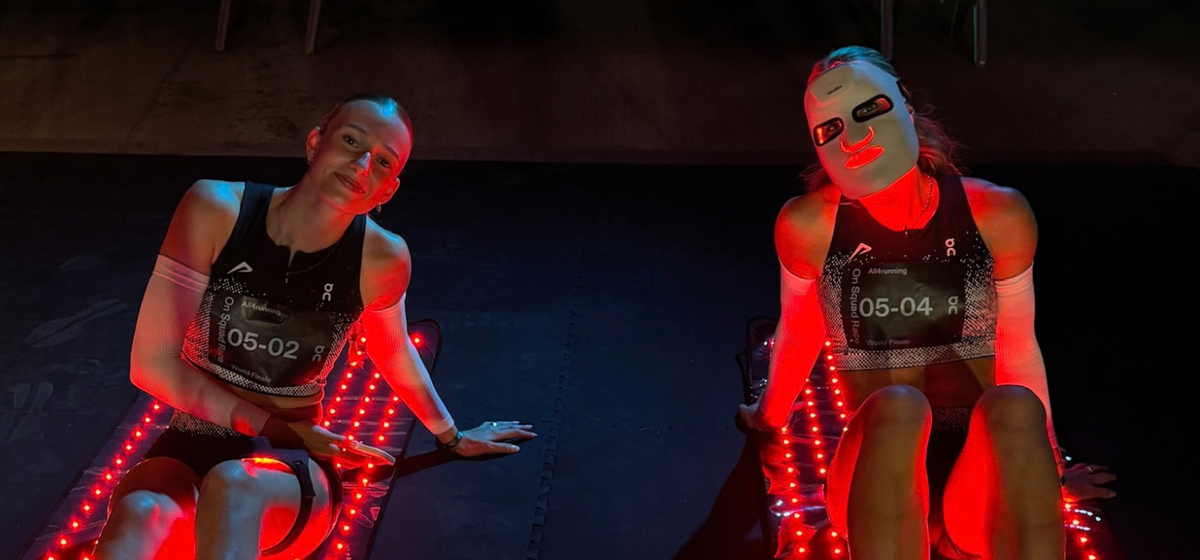
- The Recovery Patch targets one area, such as your calves after a run or your shoulders after a swim session. Wrap it around the muscle you want to focus on and relax while it works.
- The Yoga Mat covers your whole body at once. Use it during stretching, mobility work or a cool-down, so your recovery session fits into a routine you're already doing.
Is Red Light Therapy Good for Your Heart? What Research Shows
Researchers are studying photobiomodulation in cardiology, but almost all of this work happens in labs and clinical settings, not with home devices.
- A 2023 review in Cureus summarised nineteen preclinical and clinical studies on photobiomodulation and the heart, looking at heart failure and heart attack outcomes such as inflammation, oxidative stress and cardiac function. The authors called the potential promising, but stressed that more research is needed to understand the mechanisms and optimise protocols. nihnih
- A 2017 systematic review in Scientific Reports found consistently positive effects in animal models of heart damage, including smaller infarct size and less inflammation and scarring. At the same time, the authors noted that evidence for use in people is still at an early stage. acuacu
The honest conclusion: the research is interesting, but there is no evidence that using a red light device at home improves heart health. Red light therapy is not a treatment for heart conditions and should never replace medical care.
Red Light Therapy and Blood Pressure
Because nitric oxide relaxes blood vessels, researchers have also looked at blood pressure. In a 2025 animal study, Brazilian researchers found that photobiomodulation improved blood vessel function and increased nitric oxide levels in rats with menopause-related high blood pressure. fapesp
The most complete overview so far is a systematic review and meta-analysis published in September 2025 in the Journal of Clinical Medicine. It found that photobiomodulation reduced systolic and diastolic blood pressure and heart rate in clinical trials, but the certainty of that evidence was rated very low. The authors described photobiomodulation as a possible add-on therapy for hypertension, while pointing out that the trials had a high risk of bias. www.mdpi.com +2
New studies are underway. One randomised, sham-controlled trial is testing red laser light over the radial artery in 80 patients already on blood pressure medication. Until stronger evidence is available, red light therapy should not be used to manage blood pressure. If you have high blood pressure, follow your doctor's advice and talk to them before adding anything new to your routine. unensayoparami
Is It Safe With a Heart Condition or a Pacemaker?
Red light therapy is non-invasive and UV-free, and is generally considered low-risk for healthy adults. With a heart condition or an implanted device, however, it's a different story, and guidance is not consistent.
- Some clinical trials advise people with heart disease or hypertension not to use certain light therapy devices, and many studies exclude participants with an implanted pacemaker or electrical stimulator. clinicaltrialsclinicaltrials
- Other protocols specifically advise against applying infrared light to the chest area or directly over a pacemaker. clinicaltrials
- Some laser therapy practitioners argue that light poses little risk to pacemakers because the metal casing reflects it. Note that this argument is about the light itself, not about the electronics in a device. acupuncturetoday
Our advice is simple: if you have a heart condition, a pacemaker, an ICD or another implanted electronic device, consult your cardiologist or doctor before using any red light therapy device. Never place a device directly over an implant, and stop using it if you feel unwell.