Does Any Red Light Work for Red Light Therapy?
Does Any Red Light Work for Red Light Therapy?
Red light therapy has become so popular that red bulbs, LED strips and party lights are now sometimes sold as "red light therapy". So can you just screw a red bulb into your lamp and get the same results? The short answer: no. Colour is only part of the story. In this article we explain what actually makes light therapeutic, how red bulbs compare to LED therapy devices, and why Skinletics uses specific combinations of light in each product.
Is Red Light Therapy Just a Red Light?
Red light therapy, scientifically called photobiomodulation, is not about the colour you see but about how light interacts with your cells. Researchers have identified cytochrome c oxidase in the mitochondria as the main place where red and near-infrared light is absorbed, setting off a chain of processes linked to energy production and repair.
For that to happen, three things need to be right:
- The wavelength: the exact type of light, measured in nanometer (nm)
- The irradiance: how much light energy reaches your skin, measured in milliwatts per square centimeter (mW/cm²)
- The time: how long that light reaches your skin
A light can look red but fall short on all three.
Wavelength and Power: What Makes Light Therapeutic
Wavelength. Not every wavelength works equally well. Research shows that light between 700 and 780 nm is relatively ineffective, because it falls in a dip in the absorption spectrum of the key enzyme. The most-studied ranges are visible red light (around 620 to 680 nm) and near-infrared light (around 800 to 900 nm). All Skinletics devices use red light at 630 nm, a wavelength that sits squarely within the well-researched red range.
Irradiance. This is where most ordinary red lights fall short. Researchers note that below roughly 0.5 mW/cm², light exposure is essentially no different from daylight, no matter how long you sit under it. At the other end, some research groups recommend staying below 100 mW/cm² at the target tissue. Skinletics devices sit well within that range:
| Product | Irradiance |
|---|---|
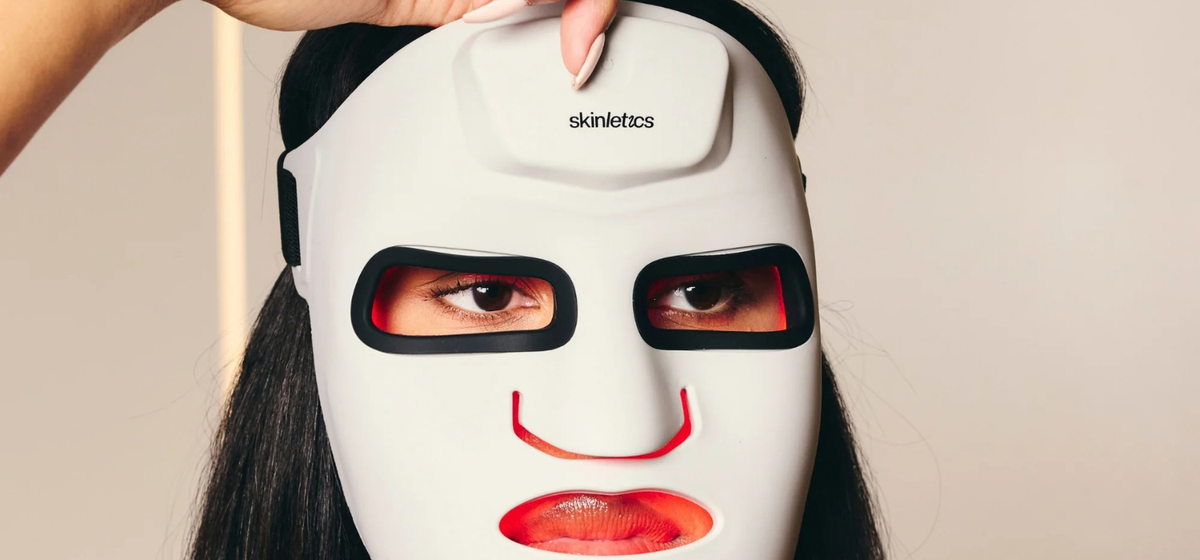
| Pro Face Mask | 30 mW/cm² |
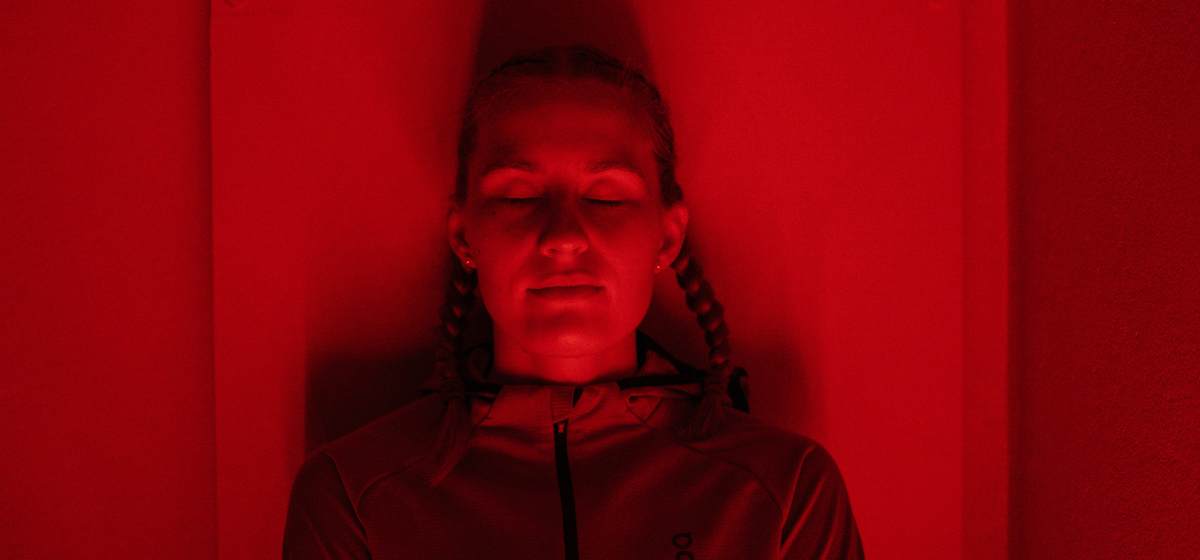
| Yoga Mat | 30–40 mW/cm² |
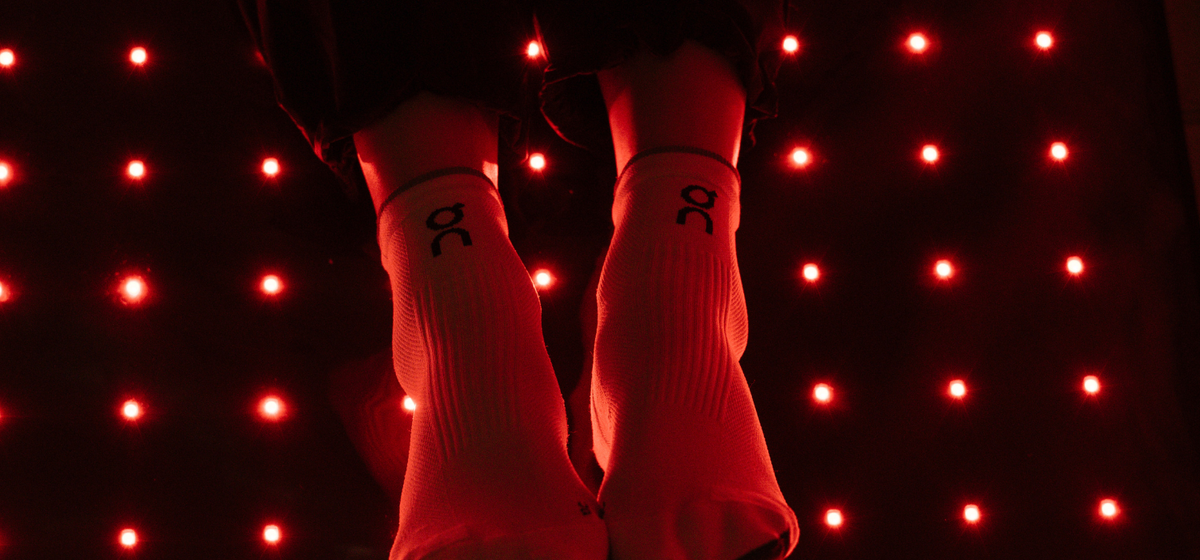
| Recovery Patch | 40–50 mW/cm² |
Dose. Irradiance multiplied by time gives the dose, measured in joules per square centimeter (J/cm²). For example, 100 mW/cm² for 60 seconds delivers the same 6 J/cm² as 1 W/cm² for 6 seconds. That's why session times are matched to the power of each device: a stronger device needs less time, a gentler one a bit more.
Red Light Bulbs vs. LED Light Therapy Devices
Red light bulbs and dedicated LED therapy devices may look alike, but they're built for different jobs.
Red light bulbs and party LEDs:
- Are designed for lighting and atmosphere, not for delivering a specific dose
- Usually don't publish wavelength or irradiance specifications
- Are used at a distance, so much less light reaches your skin
- Classic incandescent red bulbs mainly produce heat, with most of their energy outside the useful range
LED light therapy devices:
- Use LEDs selected for specific, narrow wavelengths
- Deliver a known irradiance at a set distance or in direct contact with the skin
- Come with recommended session times based on that power
LEDs themselves are not the problem. Research shows that LEDs can be just as effective as lasers for photobiomodulation. The difference lies in which LEDs are used and how much light they deliver.
What about "LED red light therapy bulbs"? These sit somewhere in between. Some do use therapeutic wavelengths, but they usually cover a small area and depend heavily on how close you are. If you consider one, look for published wavelengths and irradiance at a stated distance.
Is All Red Light Therapy the Same?
No. Even among real light therapy devices, there are big differences. When comparing devices, look at:
- Wavelengths: are they specified, and are they in well-researched ranges?
- Irradiance: is it published, and at what distance?
- Coverage: does the device cover the area you want to treat, such as your face, one muscle or your whole body?
- Contact or distance: devices worn on the skin, like a mask or patch, lose less light than panels used from a distance
- Session guidance: does the brand tell you how long to use it, based on its actual power?
- Safety and quality: certifications such as CE and FCC, and a solid warranty
A brand that doesn't share its wavelengths and irradiance gives you no way to judge whether a device delivers a meaningful dose.
Why Skinletics Combines Red, Near-Infrared and Blue Light
Each type of light has its own role, so each Skinletics product uses the combination that fits its purpose:
- Red light (630 nm) acts mainly in the skin and the layers just beneath. It's the foundation of every Skinletics device.
- Near-infrared light (830-850 nm )travels deeper into muscles and joints, making it key for recovery.
- Blue light (415 nm) acts at the very surface of the skin and is commonly used in skincare routines for blemish-prone skin.
Per product:
- Pro Face Mask: red (630 nm) + near-infrared ( 830nm) + (blue 415nm), at 30 mW/cm², for your daily skincare routine.
- Yoga Mat: red (630 nm) + near-infrared (830 nm) + blue (415nm), at 30–40 mW/cm², for full-body sessions during stretching, yoga or cool-downs.
- Recovery Patch: red (630 nm) + double dose of near-infrared (850nm + 850nm), at 40–50 mW/cm², for focused sessions on one muscle or joint.